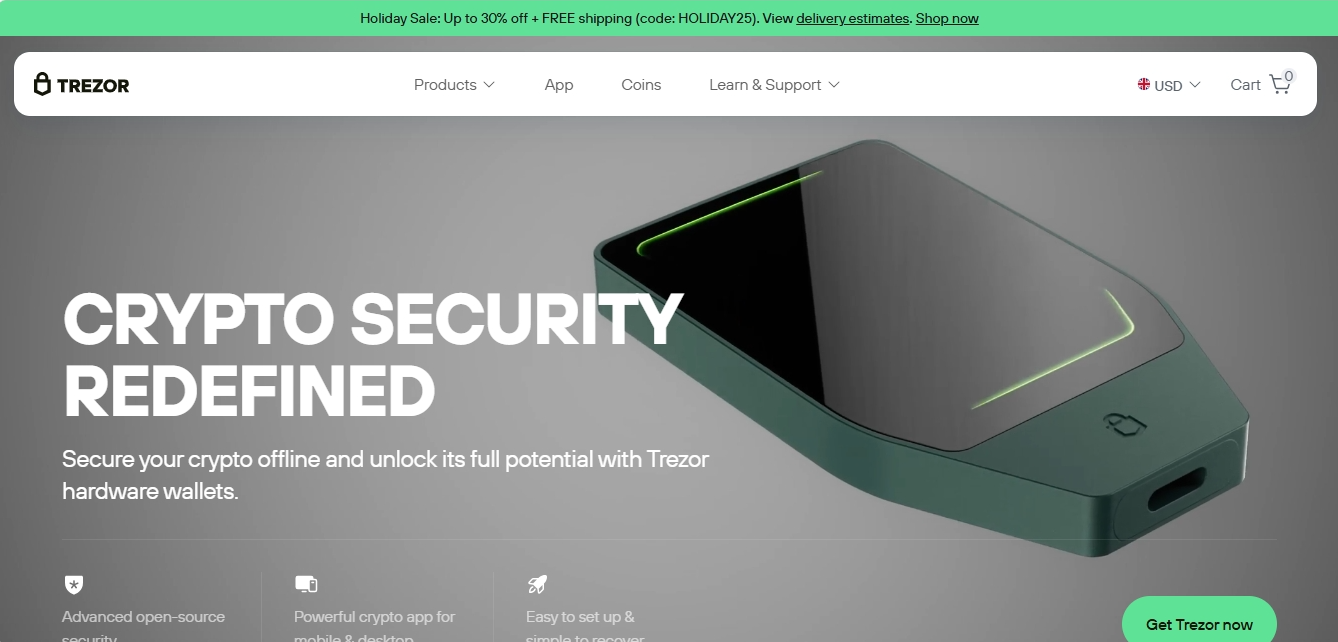
Welcome! You’ve taken an important step toward securing your cryptocurrency and digital assets with a Trezor hardware wallet. Trezor devices give you full control over your private keys in a way that’s safe, transparent, and easy to use — whether you’re new to crypto or an experienced user.
This guide will walk you through everything you need to know to get started: from unboxing your device to managing your coins securely.
Cryptocurrency is powerful, but it only stays safe when you control your private keys. A hardware wallet like Trezor stores your keys offline, isolating them from the internet and keeping them protected from hacks, malware, and phishing attempts.
Unlike software wallets or exchange wallets, your keys never leave the secure environment of your Trezor, even when you transact. That’s true ownership — you control your crypto.
Key benefits of using Trezor:
Trezor combines cutting‑edge security with intuitive usability — a design that’s perfect for both beginners and power users.
Before setting up your Trezor device, make sure you have the following:
⚠️ Your recovery phrase is the most important part of your wallet. Treat it like cash in a safe. Never share it with anyone or enter it on any website.
When you receive your Trezor device, take a moment to confirm that the packaging is intact and sealed. Genuine Trezor devices use tamper‑evident seals to protect against unauthorized opening.
If anything seems suspicious, stop and contact Trezor support. Always be cautious about devices that may have been tampered with.
Trezor Suite is the official desktop and web app for interacting with your Trezor device. It’s where you’ll:
To begin:
Follow the on‑screen prompts to begin setup.
Now it’s time to turn your Trezor into your personal wallet.
When prompted:
Make sure your PIN is something you’ll remember, but not something obvious or easy to guess.
Your Trezor will generate a recovery seed — 12, 18, or 24 words depending on your model and settings. This phrase is the only way to recover your wallets if your device is ever lost or damaged.
Important best practices:
If someone else discovers your seed, they can control your funds — so treat it with the highest level of care.
After writing it down, Trezor will ask you to confirm your seed by selecting the correct words in order.
Take your time and verify each word carefully.
This step ensures:
Once your device is set up and your seed is secure, you can add crypto accounts through Trezor Suite.
Every time you send crypto, you must confirm the transaction on your Trezor device — giving you a secure second layer of protection.
Security doesn’t stop after setup. Here are essential practices to keep your crypto safe:
No legitimate support agent, website, or tool will ever ask for your seed.
Always verify URLs (especially when entering Trezor Suite). Scammers create fake sites that look real.
Trezor periodically releases secure firmware improvements. Updating ensures you benefit from the latest protections.
Only connect your Trezor to computers and networks you trust. Avoid public or shared machines.
If your device is ever lost or broken, your crypto isn’t gone — as long as you have your recovery seed.
To restore:
Your seed is the key — never lose it.
Trezor supports a wide range of assets across major and emerging blockchains. Popular supported assets include:
New assets and integrations are added regularly through Trezor Suite updates.
Once you’re comfortable with the basics, you can explore more advanced capabilities:
These features expand what you can do while keeping your private keys secure.
Yes — as long as you have your recovery seed. You can restore your wallet on any compatible device.
No. Keys are generated and stored on the device and never leave it. Transactions are signed on the device, keeping keys offline.
They still cannot access your wallet without the recovery seed. The PIN protects the device; the seed protects the funds.
Not necessarily. One device with a secure recovery seed is sufficient for most users. Some advanced users keep a backup device with the same seed in a separate secure location.
With Trezor, your digital wealth stays in your hands — secure, accessible, and transparent. You’re not trusting an exchange, a cloud wallet, or a third party — you’re in control.
As the crypto world grows, securing your assets becomes more important. Trezor gives you the tools and the freedom to do that with confidence.